Using quality grow lights for houseplants can completely transform your indoor garden during cold seasons or in dim rooms. Natural sunlight isn’t always accessible in every home, especially during winter months when sun angles drop significantly. Supplemental illumination provides the essential light energy required for robust photosynthesis and foliage development.
Indoor plants depend on adequate light intensity to produce sugars and maintain vibrant colors. If you want to learn more about home greenery solutions, feel free to visit our website for more expert guides. Understanding how light affects cellular growth is essential for every plant parent.
Understand Light Color Spectrums
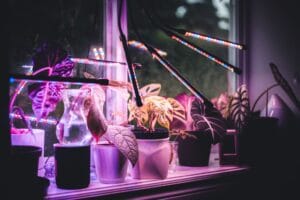
Artificial fixtures come in various spectrums, each serving a distinct purpose for botanical development. Blue light wavelengths encourage vegetative growth, healthy leaf expansion, and strong root systems.
Red light spectrums stimulate flower production, fruit setting, and seed germination. Broad-spectrum LED fixtures mimic natural sunlight closely, delivering a balanced blend of both red and blue wavelengths. Checking detailed world encyclopedia resources can offer deep scientific context on photosynthetically active radiation.
Selecting the Best Grow Lights for Houseplants
Selecting the appropriate fixture type depends on your spatial constraints and plant collection size. Light-emitting diode (LED) fixtures remain the most popular choice due to their high energy efficiency and low heat output.
Fluorescent T5 tubes work exceptionally well for seedling trays, herbs, and low-light tropical varieties. Compact incandescent bulb options exist, but they consume more electricity and generate excessive heat that can scorch delicate leaves.
Master the Ideal Distance and Light Intensity
Placing fixtures too close to foliage causes physical burns, bleaching, and crispy leaf edges. Conversely, hanging fixtures too far away leads to weak, leggy stems as plants stretch desperately toward the light source.
Positioning your grow lights for houseplants at the correct distance usually requires keeping LEDs about 12 to 24 inches above the top canopy. Adjusting the distance periodically accommodates new growth while keeping light distribution consistent.
Establish a Consistent Daily Lighting Schedule
Plants require a balanced dark period to process energy and rest, meaning fixtures should never remain lit continuously for 24 hours. Most tropical houseplants thrive best with 12 to 16 hours of daily supplemental light exposure.
Operating grow lights for houseplants on an automated timer eliminates human error and establishes a reliable biological rhythm. You can explore additional automated home ideas on our homepage to streamline your daily routines. Consistency prevents physical stress and premature drop of lower leaves.
Match Light Intensity to Your Plant Species
Not all indoor plants share the same photoperiod or light intensity requirements. Succulents, cacti, and flowering varieties demand bright, direct artificial rays for up to 16 hours every single day.
Foliage plants like pothos, snake plants, and philodendrons adapt easily to lower intensity levels. Consulting established botanical guidelines from expert database networks helps clarify individual species needs. Tailoring light strength prevents both overexposure stress and light starvation.
Monitor Temperature and Heat Output
Even high-efficiency LEDs generate some degree of ambient heat near the driver components. High ambient temperatures dry out soil prematurely and drastically reduce localized humidity levels around delicate leaves.
When utilizing grow lights for houseplants in enclosed spaces like plant cabinets or small shelves, maintain adequate airflow. Using small circulation fans dissipates trapped thermal pockets and strengthens stem structure through gentle air movement.
Adjust Lighting Based on Seasonal Changes
Indoor environmental conditions shift dramatically between summer and winter seasons. During summer, natural ambient daylight increases, allowing you to dim fixtures or shorten artificial light operating hours.