Modern workspaces thrive on refined aesthetics where thoughtful design boosts focus and reduces daily friction. Incorporating low-maintenance office plants into your personal workstation creates a serene environment without adding visual clutter or overwhelming your schedule. A clean desktop layout combined with vibrant botanical elements offers a welcome counterbalance to screen fatigue, helping you stay calm, energized, and creative during demanding work routines.
Whether you manage daily tasks from a bustling open-plan corporate office or a quiet home workstation, selecting compact office plants allows remote professionals and corporate employees to soften sharp furniture edges and elevate functional decor. Integrating organic elements with minimal styling principles transforms sterile digital environments into balanced, restorative sanctuaries. Let us explore how purposeful botanical choices and subtle design updates can revitalize your work setting with ease.
The Power of Minimalist Greenery in Modern Workspaces
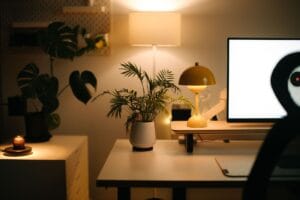
Minimalism in interior design is often misunderstood as stark subtraction. In practice, true workspace minimalism focuses on intentional curation—selecting items that serve a clear aesthetic or functional purpose while removing unnecessary distractions. Live plants fit this philosophy perfectly because they provide dynamic architectural shapes, organic texture, and natural color variations that synthetic accessories simply cannot replicate.
Integrating living elements into your daily desk setup contributes directly to visual ergonomics. Staring at digital displays for eight hours a day induces cognitive fatigue and eye strain. Looking up from your monitor to glance at a vibrant leaf gives your ciliary eye muscles a natural micro-break, supporting visual recovery and mental clarity throughout long shifts.
Furthermore, plants break up the cold uniformity of metal monitors, plastic keyboards, and laminated wooden desks. Their organic lines introduce rhythm and tactile warmth, turning an ordinary work desk into a personalized haven that feels inviting rather than strictly task-oriented.
Critical Criteria for Selecting Modern Office Plants
When shopping for resilient office plants, prioritizing slow-growing species with low maintenance requirements ensures long-term success. Desk real estate is valuable, and you need botanical accents that stay compact without requiring constant repotting, pruning, or messy drip trays.
1. Lighting Adaptability
Commercial and home offices vary widely in natural illumination. While some desks sit next to floor-to-ceiling southern windows, many rest in shadowy corners or rely entirely on overhead LED panels. Making certain office plants adaptable to indirect light or artificial fixtures prevents leggy growth, pale foliage, and leaf drop.
2. Watering Tolerance
Busy work schedules, long business trips, and weekend breaks mean desk greenery must survive occasional neglect. Ensuring selected office plants withstand extended dry spells allows drought-tolerant cultivars with water-storing stems, fleshy leaves, or rhizomes to survive without drooping or browning at the tips.
3. Compact Habit and Scale
A giant potted shrub may look stunning in a building lobby, but on a primary desk surface, it obstructs monitor views and competes with keyboard movement. Minimalist desk design relies on compact, slow-growing plants that maintain a small footprint while offering strong vertical or architectural presence.
4. Low Litter and Cleanliness
Desk plants should not shed sticky sap, drop constant dead blooms, or scatter pollen over delicate hardware. Choosing broad-leafed, non-blooming, or evergreen perennials keeps your work surface clean and free of unwanted debris.
Top 5 Minimalist Office Plants for Desk Decor
Discovering which office plants offer the best visual appeal without requiring high maintenance makes all the difference between an effortlessly stylish desk and a high-maintenance chore. The following five species excel in low-light resilience, aesthetic harmony, and clean presentation.
1. Snake Plant (Sansevieria Laurentii / Trifasciata)
The Snake Plant stands as an architectural marvel among contemporary interior foliage choices. Its rigid, sword-shaped leaves grow upright, delivering striking vertical lines that harmonize with modern computer setups, monitor arms, and geometric desk accessories.
This resilient species handles extreme light fluctuations, making it one of the most reliable office plants for windowless cubicles and dimly lit corner desks. It stores moisture inside thick cuticles, requiring water only when the potting mix dries out completely.
Pairing structured office plants like dwarf Sansevieria cultivars (such as Sansevieria trifasciata ‘Hahnii’) with a cylindrical matte ceramic pot yields a clean visual presence. Its structured leaves hold their shape for months without rampant spreading, keeping your workspace neat and uncluttered.
2. ZZ Plant (Zamioculcas Zamiifolia)
Featuring glossy, deep-green leaves arranged along arched stems, the ZZ Plant adds instant polish to any desktop decor. The shiny wax surface of its foliage reflects ambient room light, creating an eye-catching highlight against neutral desk mats and dark timber surfaces.
Recognized as one of the most stylish office plants, the ZZ plant requires almost no daily attention. Underground tuberous rhizomes act as water reservoirs, allowing the plant to thrive during extended periods without irrigation. It grows gracefully under artificial lighting, making it ideal for fluorescent office conditions.
For professionals seeking durable office plants for micro-desks where space is tight, a miniature cultivar like ‘Zenzi’ is ideal. Its tightly packed leaves and compact stems retain an ultra-clean silhouette while introducing rich emerald tones to your setup.
3. Devil’s Ivy (Pothos / Epipremnum Aureum)
Pothos brings soft, heart-shaped leaves and trailing tendrils that break up rigid desk angles. While uncontrolled vines can clutter a workstation, occasional pinching keeps Pothos bushy, compact, and perfectly proportioned for small desktop pedestals or monitor stands.
Pothos remains one of the best trailing office plants for elevated monitor shelves, adapting seamlessly to fluctuating humidity levels and signaling water needs by slightly softening its leaves. A light watering quickly restores its firm structure, offering a forgiving experience for beginners. Variegated types like ‘Golden Pothos’ or ‘Marble Queen’ add cream and gold flecks, creating natural visual points of interest.
To review verified care data and botanical profiles, explore research published by the Royal Horticultural Society for authoritative horticultural guidelines. A small ceramic pot of trimmed Pothos offers smooth organic charm that softens hard metal accessories.
4. Compact Succulents (Echeveria & Jade)
Succulents offer unmatched space efficiency for compact work surfaces and laptop setups. Their fleshy leaves store moisture in symmetrical rosette formations, serving as living sculptures that fit neatly alongside desk organizers and pen holders.
Integrating compact office plants like Echeveria into smaller workspaces delivers excellent aesthetic value. Species like Echeveria elegans or Crassula ovata (Jade Plant) excel near windows or directly beneath bright LED desk lamps. Their slow growth rates ensure they maintain clean proportion without overtaking adjacent work items.
Arranging three tiny succulents in matching concrete or clay pots establishes rhythm and balance. Their varied textures—ranging from powdery blue-gray to deep jade green—provide understated variety without cluttering your environment.
5. Air Plants (Tillandsia)
Air plants redefine traditional indoor gardening because they grow without soil. Tillandsia species absorb moisture and atmospheric nutrients through microscopic leaf scales known as trichomes.
Air plants stand out among soil-free office plants for clean environments because they lack root systems requiring soil pots. You can display Tillandsia in minimalist geometric wire stands, mounted on driftwood, or placed inside small porcelain dishes. This soil-free nature makes them exceptionally clean for delicate electronic environments where dirt spills must be avoided.
A quick weekly misting or brief soak in water keeps Tillandsia vibrant. Their sculptural, spiky forms offer an ultra-modern aesthetic that complements contemporary tech gear.
Comparison Table: Ideal Desk Plants at a Glance
| Plant Name | Light Need | Watering Frequency | Growth Rate | Best Feature |
|---|---|---|---|---|
| Snake Plant | Low to Bright Indirect | Every 3–4 weeks | Slow | Upright vertical architecture |
| ZZ Plant | Low to Medium | Every 3–4 weeks | Slow | High-gloss evergreen foliage |
| Pothos | Medium to Bright Indirect | Every 1–2 weeks | Moderate | Soft cascading foliage |
| Compact Succulents | Bright Light / Direct Sun | Every 2–3 weeks | Very Slow | Small geometric footprint |
| Air Plants | Medium to Bright Indirect | Weekly mist / soak | Slow | 100% soil-free display options |
Styling Principles: Containers and Desk Decor Integration
Selecting the right plant is only half the equation in creating a harmonious setup. Container choice and desk placement dictate whether your greenery feels like an integrated design element or an accidental clutter source.
1. Pot Materials and Textures
Selecting proper vessels for office plants enhances overall desk aesthetics significantly. To preserve modern minimalist appeal, select pot materials that coordinate with existing office hardware. High-grade ceramics with matte white, charcoal, or sandy beige finishes blend smoothly into Scandinavian and contemporary spaces. Industrial desk styles pair remarkably well with cast concrete, brushed aluminum, or stone containers.
Avoid heavily patterned, multicolored, or overly ornate pots that draw attention away from the foliage. Consistent monochrome finishes create visual cohesion across your desk surface.
2. Color Palette Harmony
Stick to a curated color scheme consisting of two neutral base tones alongside organic green accents. For instance, pairing a matte black desk mat with light oak accents and white ceramic pots establishes an elegant visual hierarchy. Greenery acts as the primary accent color, bringing life to the layout without introducing harsh visual friction.
3. Cable Management and Spatial Balance
A minimalist desk relies on clean lines, which means hiding power cords, display cables, and charging leads behind monitor arms or cable management trays. Positioning taller office plants near monitor stands balances sightlines and visually covers necessary technical connection points.
Position taller plants toward the back corners of your desk to frame your monitor without blocking screen borders. Keep front working zones clear for your keyboard, mouse pad, and active documents.
Lighting Guidelines for Desk Plants
Proper illumination keeps your plants healthy and vibrant over time. Understanding your office lighting conditions helps you position greenery for maximum longevity.
Evaluating Natural Window Exposure
Matching specific office plants to available window light ensures robust growth without burning delicate leaves:
- North-Facing Windows: Provide consistent, gentle indirect light ideal for Pothos, Snake Plants, and ZZ Plants.
- East-Facing Windows: Offer soft morning sunlight that benefits most tropical species without scorching delicate foliage.
- South & West-Facing Windows: Deliver intense afternoon rays suitable for light-loving succulents, cacti, and Jade plants.
Utilizing Task Lamps and Artificial Grow Lights
If your office lacks direct window access, supplementing natural light for office plants with full-spectrum LEDs provides continuous light needed for photosynthesis. Modern full-spectrum LED desk lamps can easily supplement natural daylight. Position an adjustable LED light 12 to 18 inches above low-light plants for 8 to 10 hours daily. Full-spectrum bulbs mimic natural sunlight wavelengths, encouraging growth without generating excess thermal heat that dries out soil.
Watering and Routine Care for Busy Professionals
Maintaining indoor foliage should enhance your daily work life, not add stress. Establishing a simple, predictable maintenance system keeps your plants pristine with minimal effort.
The Finger-Moisture Testing Method
Schedules based on rigid calendar days often lead to overwatering because room temperature and seasonal humidity alter evaporation rates. Always check soil moisture by inserting your finger index-deep into the potting mix. If the soil feels dry and loose at depth, water thoroughly; if damp, wait several days before rechecking.
Preventing Drainage Disasters on Wooden Surfaces
Water marks damage costly wooden desks and laminate finishes. Always choose planters with sealed matching drip saucers or utilize an internal nursery pot setup. Place felt furniture pads underneath planters to guard against condensation and surface scratches when repositioning items.
If your workspace gets minimal light or low airflow, pairing your setup with other low-water plants keeps care remarkably simple while building a uniform care schedule across your entire space. Learn more about our editorial standards on our About Us page.
Seasonal Care and Fertilization Adjustments
Indoor microclimates fluctuate with the seasons. Adjusting routine care for office plants during winter months prevents root strain, as plants slow down their growth in response to shorter daylight hours and cooler ambient temperatures. Reduce watering frequency by roughly half during late autumn and winter, allowing the soil extra time to dry out between waterings.
When warm weather returns in spring, feeding office plants lightly in spring supports steady growth throughout the active growing season. Apply a balanced liquid houseplant fertilizer diluted to half-strength once in early spring and once in mid-summer. Avoid heavy feeding, as desk plants are intended to stay compact rather than grow aggressively.
Pest Prevention and Dusting Foliage
Keeping indoor office plants free from dust and common pests ensures long-term vitality. Indoor dust collects quickly on smooth leaves, blocking sunlight absorption and diminishing overall shine. Wipe broad leaves once a month using a damp microfiber cloth. This quick step restores glossy leaf luster and ensures efficient air exchange.
Inspect leaf undersides and stem joints regularly during monthly dustings. If you notice early signs of spider mites or mealybugs, isolate the plant immediately and wipe affected areas with a mild insecticidal soap or diluted neem oil solution.
Environmental and Psychological Workplace Benefits
Integrating botanical elements into workplace design yields tangible benefits beyond clean visual appeal. Environmental psychology research shows that introducing natural elements into built environments—a design strategy known as biophilia—positively influences mood, focus, and stress recovery.
1. Stress Reduction and Mental Resilience
Observing natural forms, textures, and subtle greenery reduces cortisol levels and lowers sympathetic nervous system arousal. Studies on biophilic design confirm that living office plants lower physiological stress during intense work intervals, allowing brief visual breaks to calm mind strain and restore mental focus.
2. Acoustic Dampening in Open Spaces
Hard surfaces like glass windows, concrete walls, and engineered wood desks bounce sound waves around modern rooms, contributing to acoustic echo. Leaves and stems break up sound reflection, subtly dampening ambient background noise in home offices and shared spaces.
3. Air Quality Enhancement and Humidity Regulation
Incorporating functional office plants helps refresh stagnant cubicle air while providing natural humidity regulation. Air conditioning and central heating systems reduce indoor humidity, causing dry eyes and throat irritation. Through transpiration, living plants release water vapor into the air, gently balancing local humidity right where you spend your workday.
Troubleshooting Common Desktop Plant Issues
Even drought-tolerant plants occasionally display signs of distress. Recognizing early indicators allows you to make quick care adjustments before serious damage occurs.
Yellowing Leaves
Yellow foliage frequently signals overwatering or soggy soil roots. Evaluating moisture levels for office plants prevents soggy root systems from deteriorating. Allow the potting mix to dry completely before watering again, and ensure excess water drains out fully instead of pooling inside the container base.
Brown Leaf Tips
Crisp, brown tips indicate dry indoor air, mineral accumulation from hard tap water, or underwatering. Switch to filtered water or mist around the plant occasionally to boost local ambient humidity.
Leggy or Stretched Stems
When stems grow long, thin, and pale, the plant is reaching toward available light sources. Relocating light-starved office plants closer to desk lamps restores compact structure and maintains dense leaf spacing.
Frequently Asked Questions
Can office plants thrive in windowless offices?
Yes. Determining whether low-light office plants can thrive under overhead LEDs comes down to light duration. Species like Snake Plants and ZZ Plants thrive under standard fluorescent or full-spectrum LED light fixtures. Simply leave office lights turned on for 8 to 10 hours during regular work hours to maintain healthy foliage.
How do I prevent pest infestations on desk plants?
Preventing unwanted pests on office plants requires simple weekly checks and avoiding overwatering. Avoid letting excess water sit in saucers, clean foliage regularly with a damp microfiber cloth, and inspect stem nodes whenever you water.
How often should I fertilize desk plants?
Desktop plants require very light feeding. Apply a balanced, water-soluble indoor plant fertilizer diluted to half-strength once during spring and once in mid-summer. Avoid fertilizing in autumn and winter when plant growth naturally slows.
How do I clean my plants without damaging sensitive computer gear?
Remove the plant container from your desk and move it to a sink or breakroom counter before watering or cleaning foliage. Wipe down leaves with a damp cloth, let excess moisture drain completely, and wipe the container bottom dry before returning it to your workstation.
Conclusion: Crafting Your Minimalist Sanctuary
Building an inspiring, productive workspace does not require cluttering your desk with complex decorations. By carefully selecting resilient, compact greenery paired with sleek ceramic or concrete planters, you create a calm visual focal point that supports daily focus and well-being.
Choosing the right office plants transforms dull corporate desks into inspiring sanctuaries. While many office plants demand specialized care, choosing low-maintenance options like Snake Plants, ZZ Plants, and air plants keeps maintenance effortless. Invest in quality containers, position your plants thoughtfully, and enjoy a balanced workspace that harmonizes technology with natural beauty.